Legal & Ethics Venture Institute
A strategic rebranding and functional React prototype to transform a static text-heavy page into an engaging user friendly prototype.
Role: Design & Front-end
•
Tech: Figma + React + Tailwind
•
Duration: 4 weeks
TL;DR
Cognitive Load
Replaced dense legal paragraphs with progressive disclosure UI (Cards & Timelines).
01
Navigability
100% Keyboard and screen-reader accessible semantic HTML structure and breadcrumbs
02
Responsiveness
Fluid typography and minimum 44x44px touch targets implemented for mobile users.
03
| Problem
The
Identity Crisis
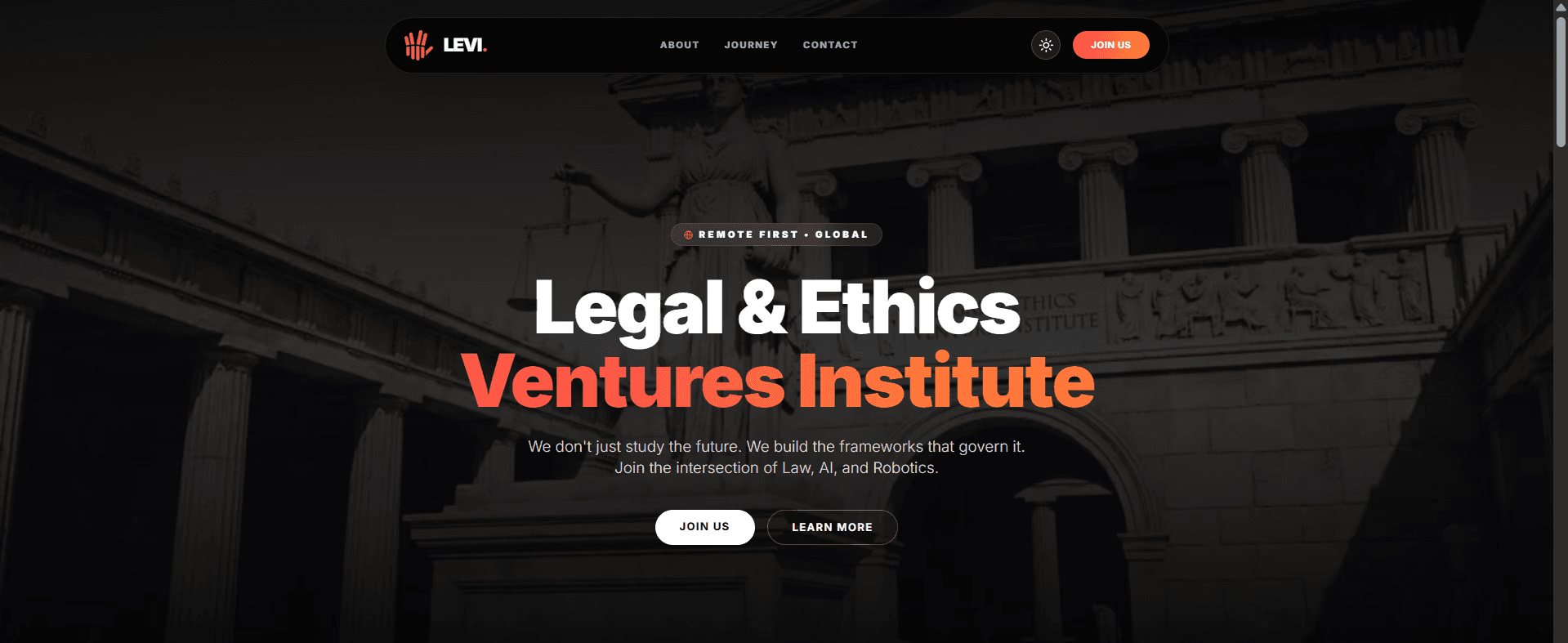
The original website suffered from an identity crisis. It looked like a PowerPoint presentation, walls of text that made students assume it was just another lecture series. The goal was to rebrand it as a 'Venture Institute' while keeping the academic rigor.
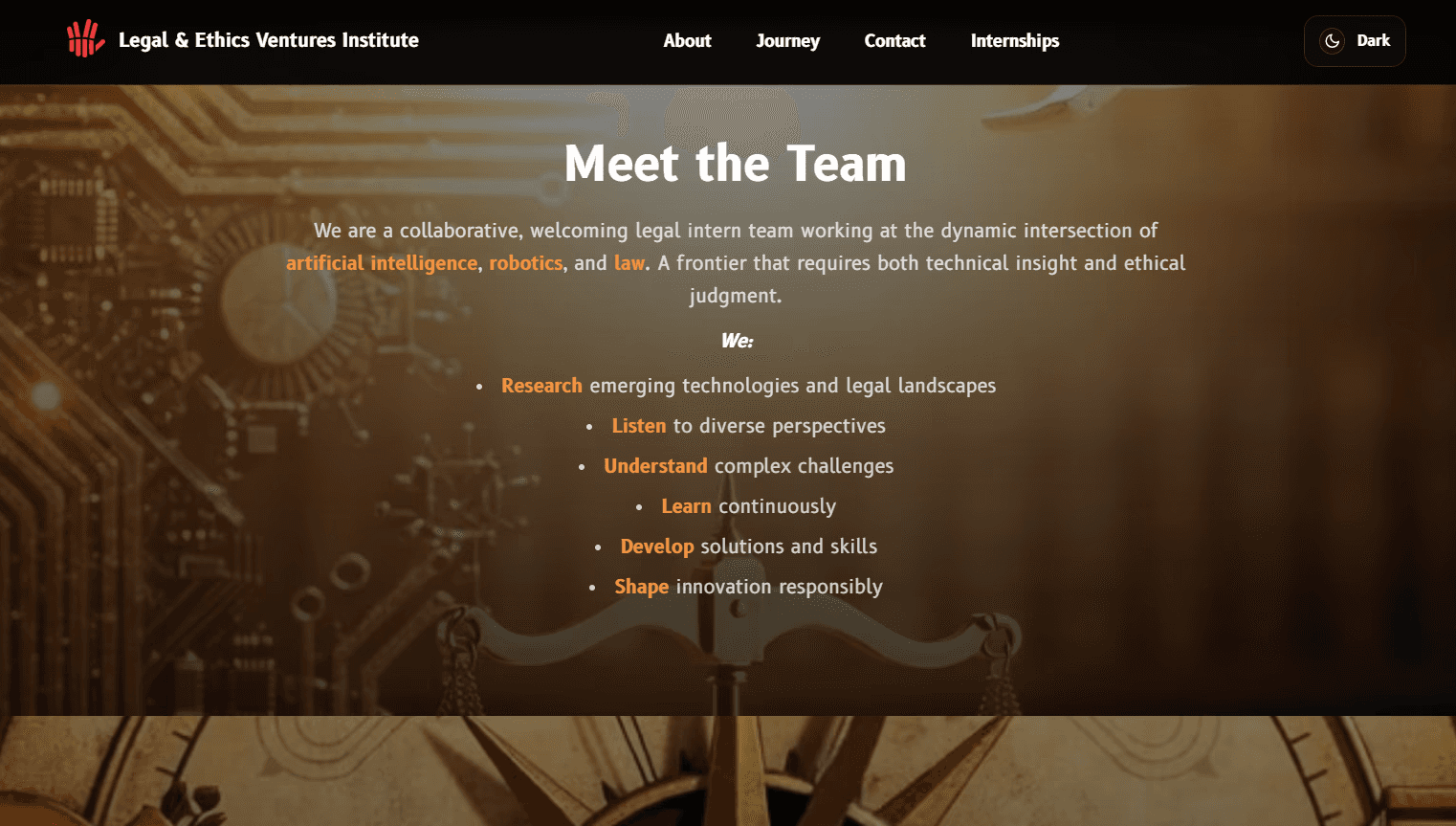
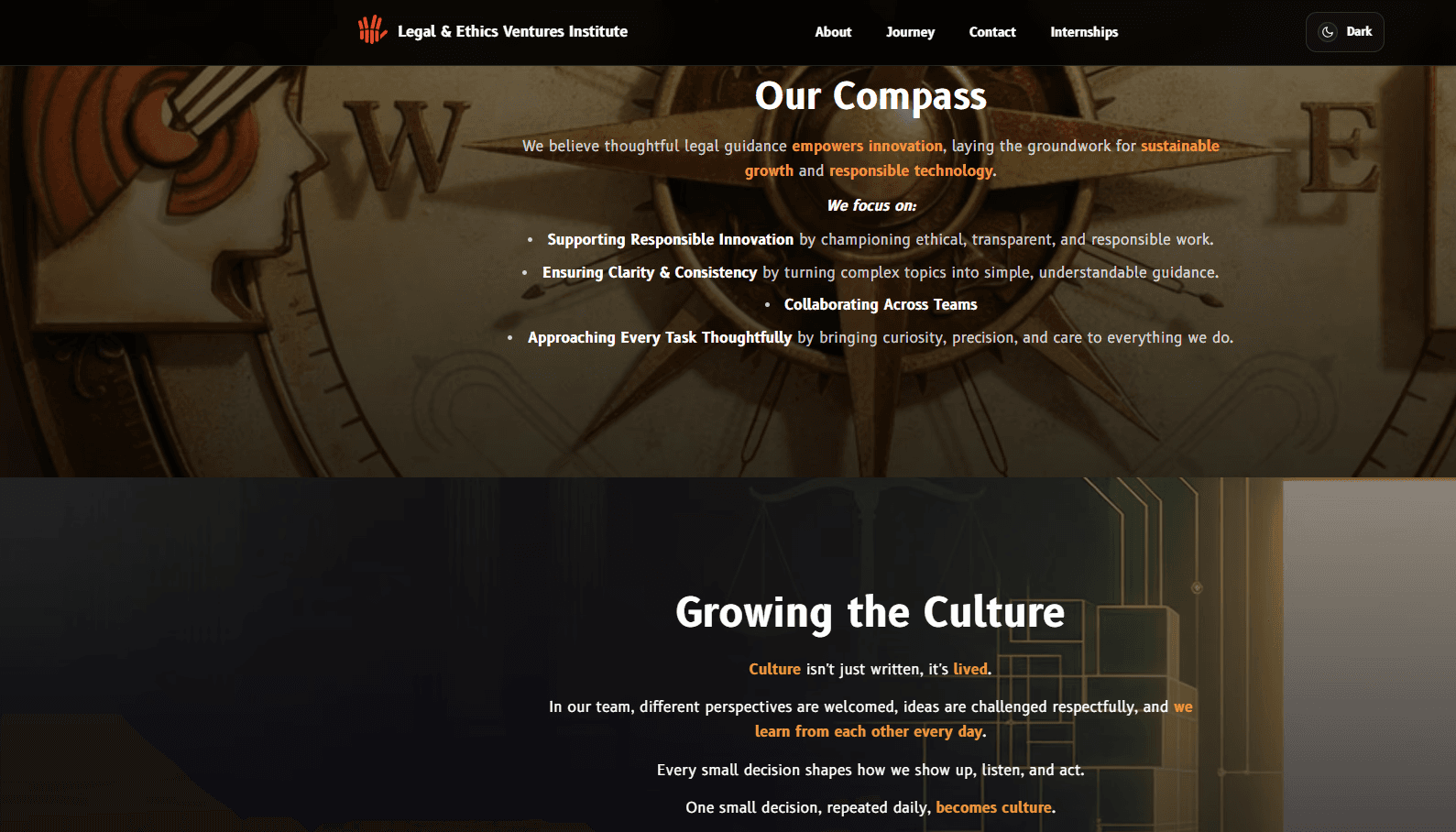
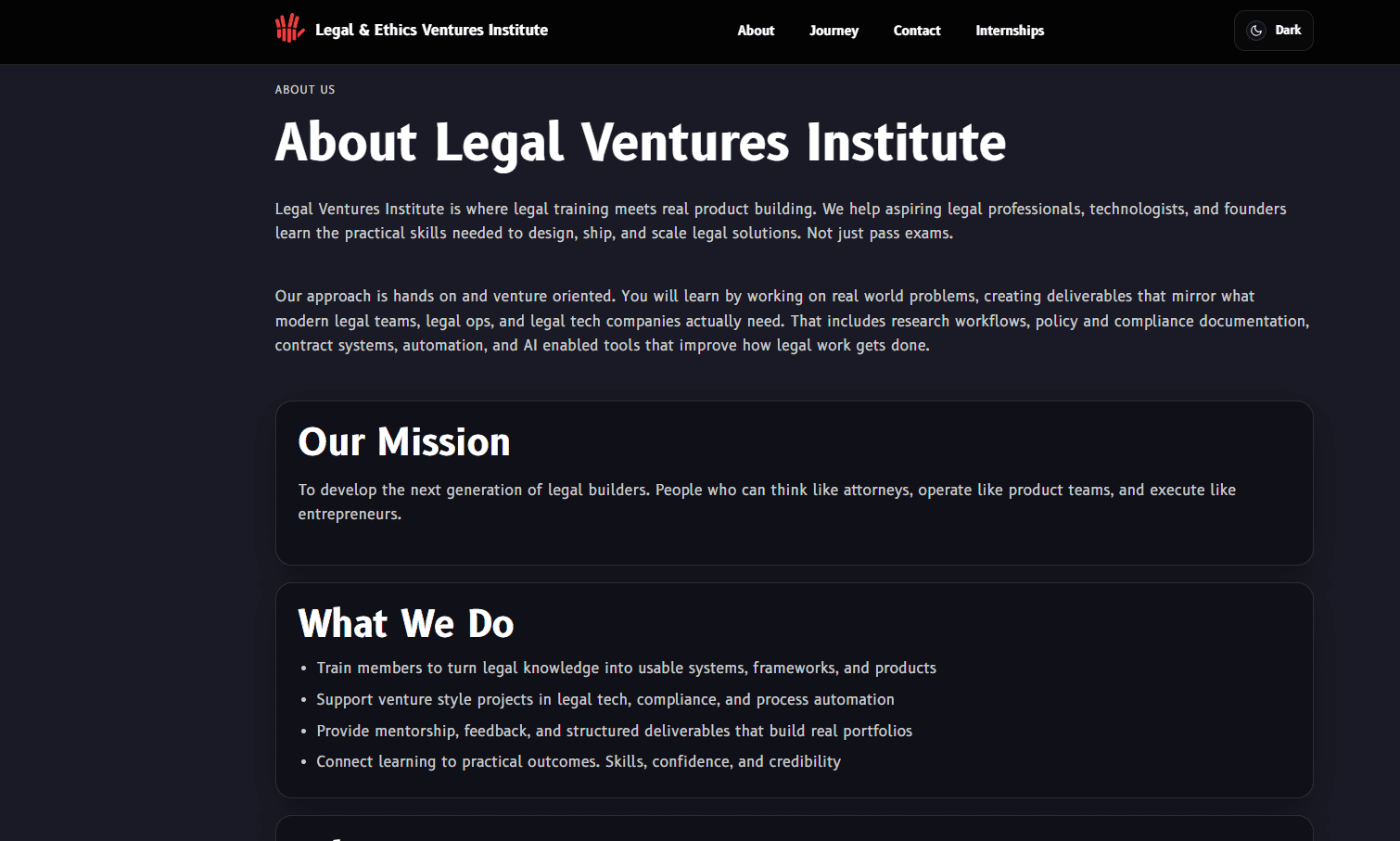
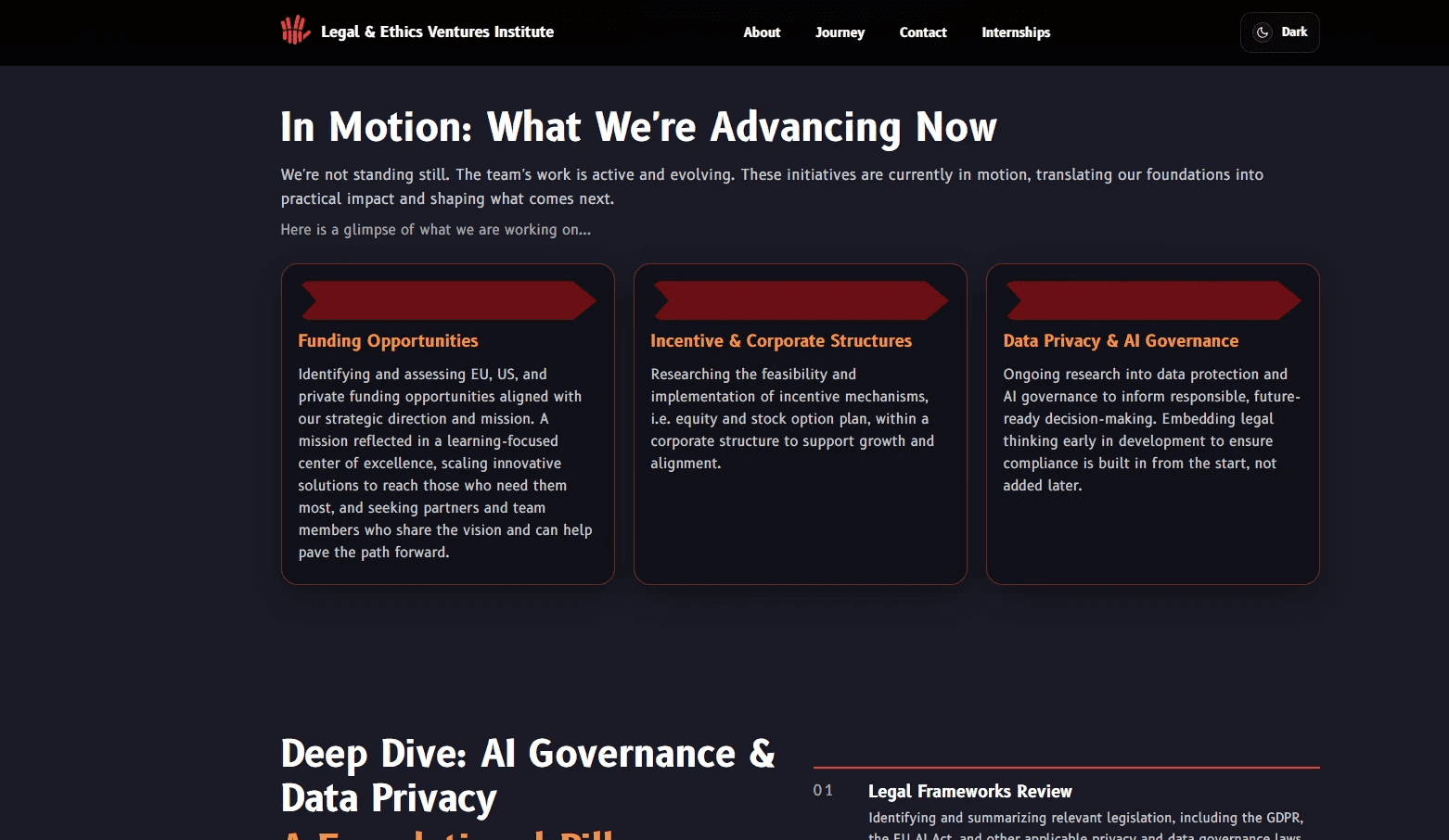
Key Challenges
I had to figure out how to make walls of text engaging without losing meaning.
1
The Constraint
Keep All The Text.
The only requirement was: Don't delete anything. My challenge wasn't just 'redesigning', it was figuring out how to make heavy legal definitions engaging without losing the meaning.
I had to guide the user's eye so they wouldn't get bored.
2
The Fix
Visual Storytelling.
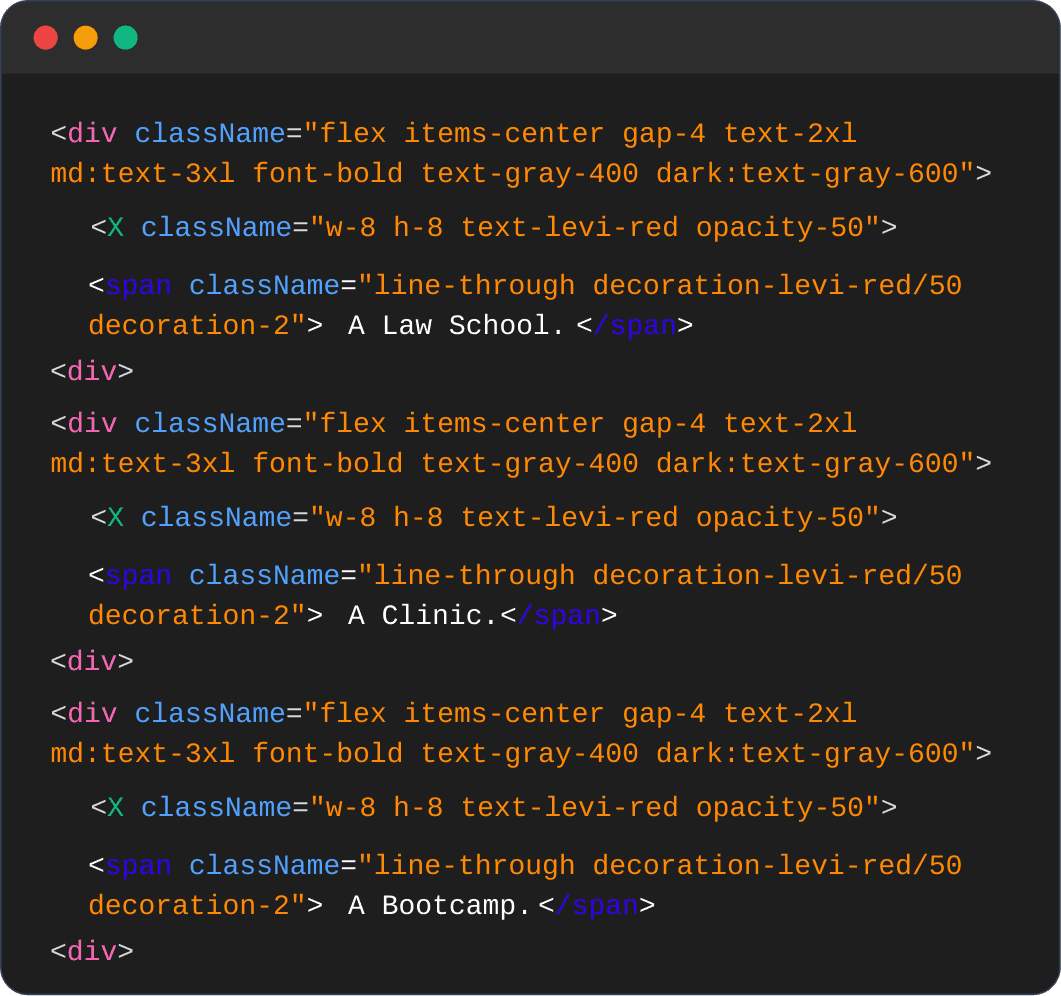
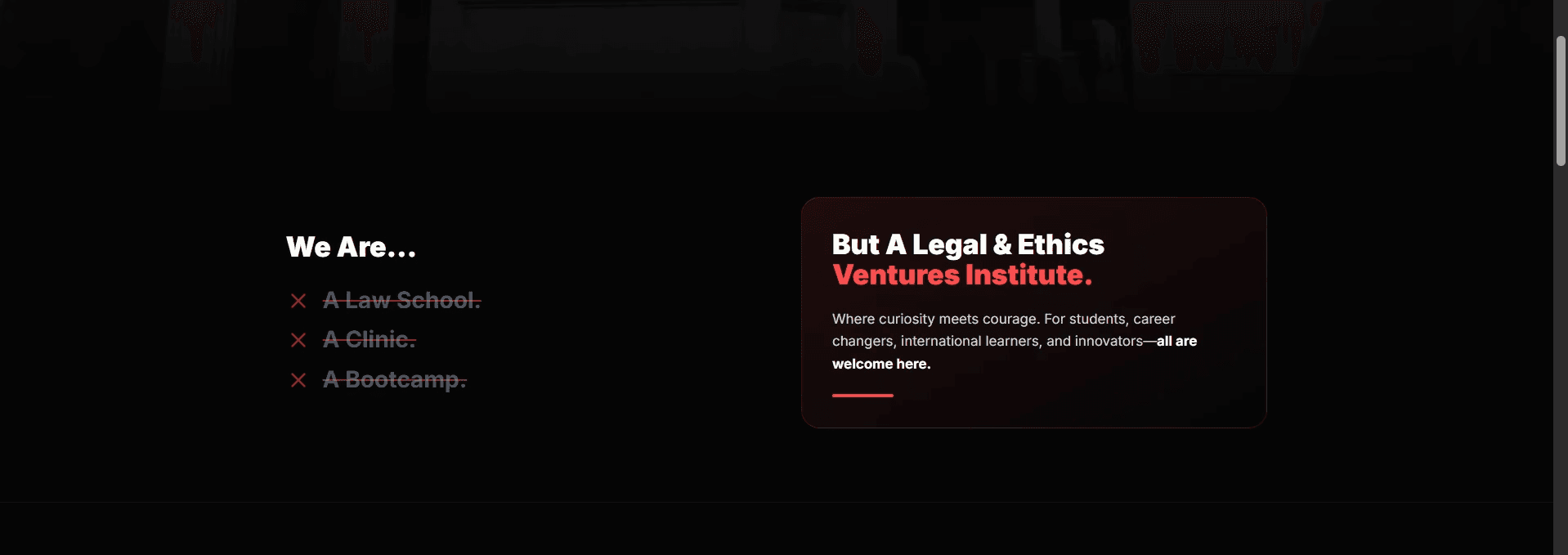
Instead of hiding the text, I styled it. For the 'Who We Are' section, I used a 'Redline' pattern to cross out what LEVI is not. This turned a boring list into a bold statement.
3
The Build
Tailwind as Design
I used Tailwind CSS to enforce this hierarchy in the browser. Using utility classes, I muted the 'rejected' text and applied a bold strike-through to ensure the meaning was clear even to screen readers.
| Redesigned features
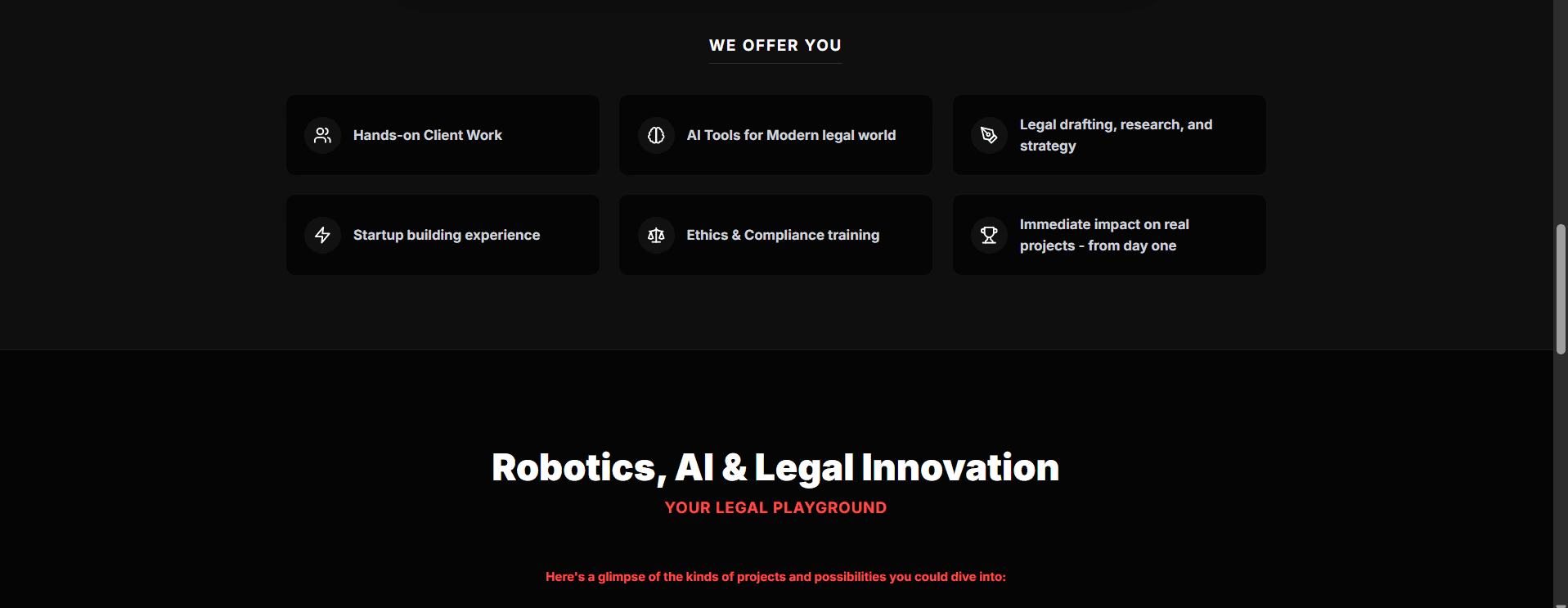
Inclusive Themes
Dark mode isn't just an aesthetic trend; it's an accessibility feature. However, for users with astigmatism, dark mode can cause 'halation' (text blurring). I engineered a seamless theme toggle that respects system preferences, dynamically shifting the brand palette to maintain strict WCAG AA contrast ratios in both environments.
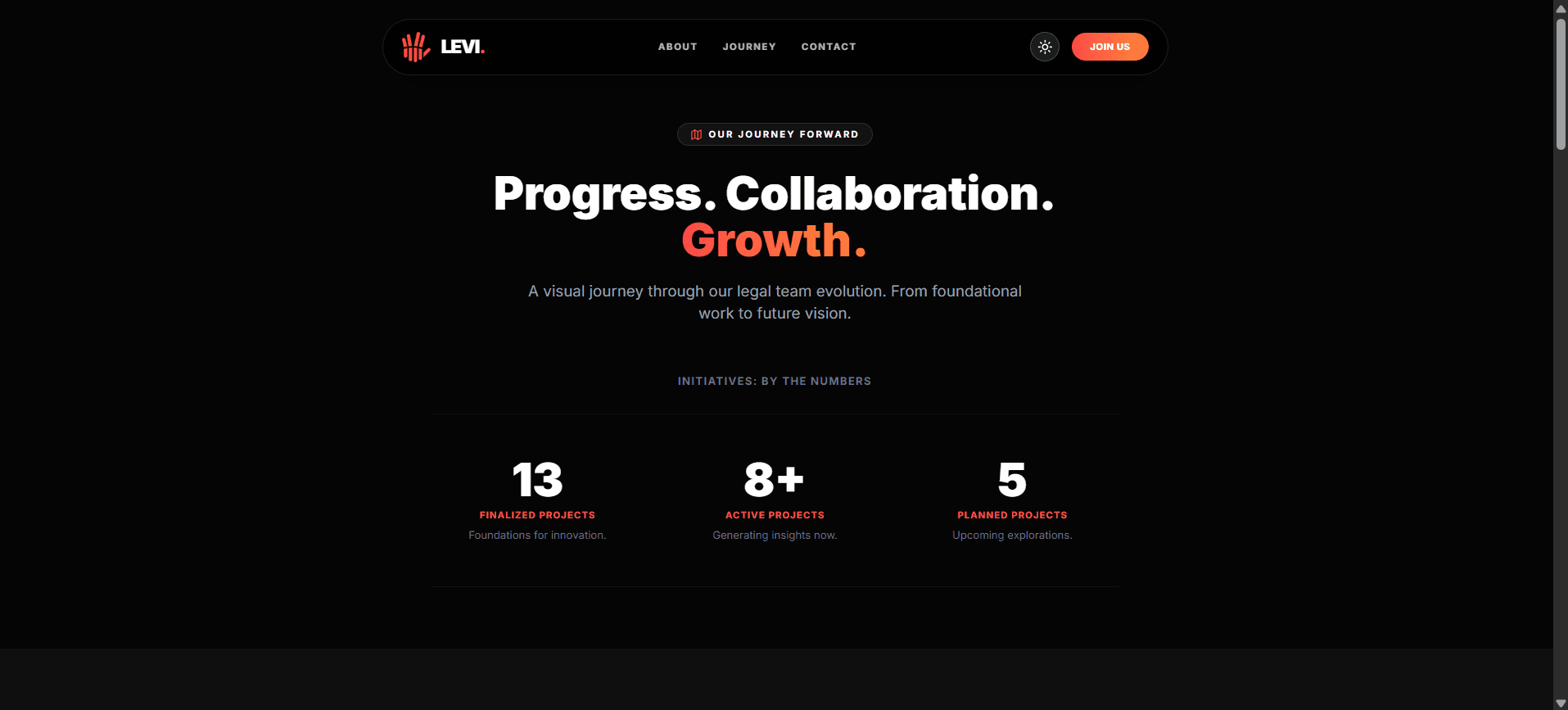
Journey as Timeline
I transformed a standard text-heavy roadmap into a responsive, vertical timeline. By alternating left and right alignments and using clear visual nodes, I created a spatial rhythm. This progressive disclosure allows users—especially those with cognitive or attention-related disabilities—to digest complex project phases one step at a time without feeling overwhelmed.
Theme: Greek Futurism
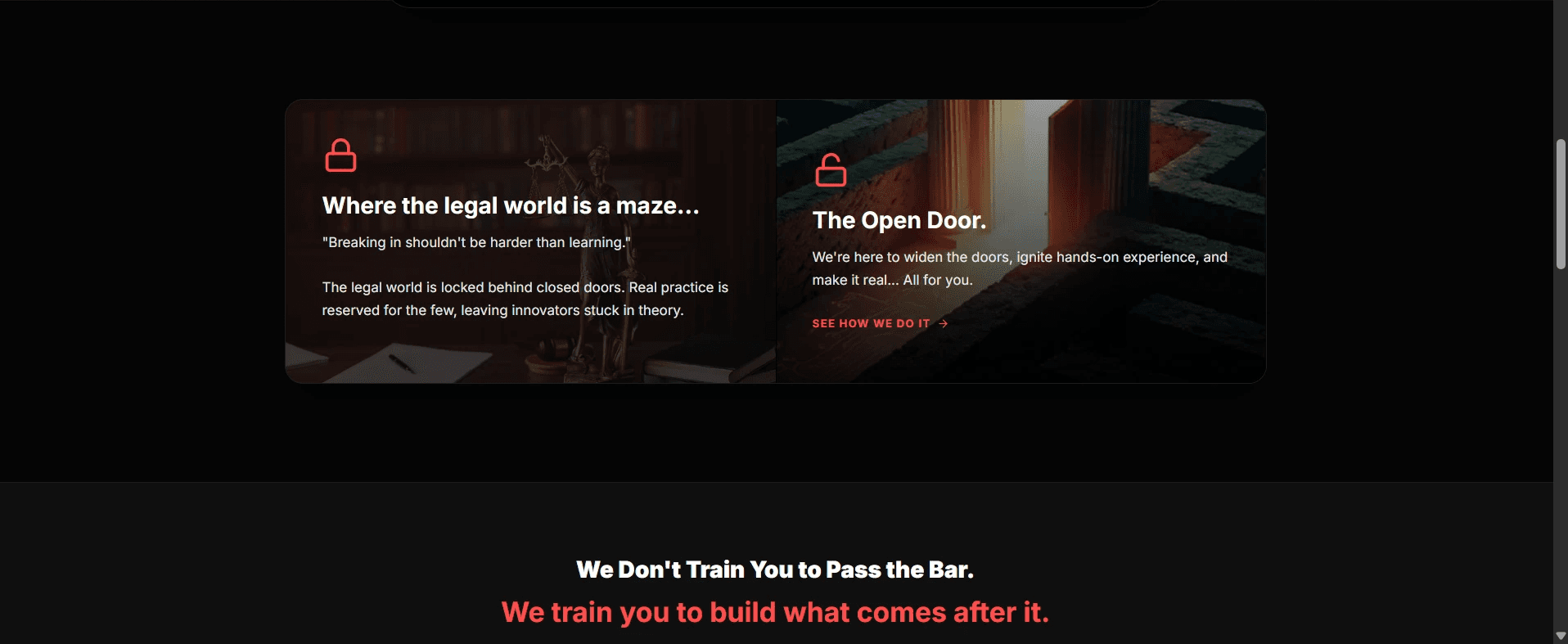
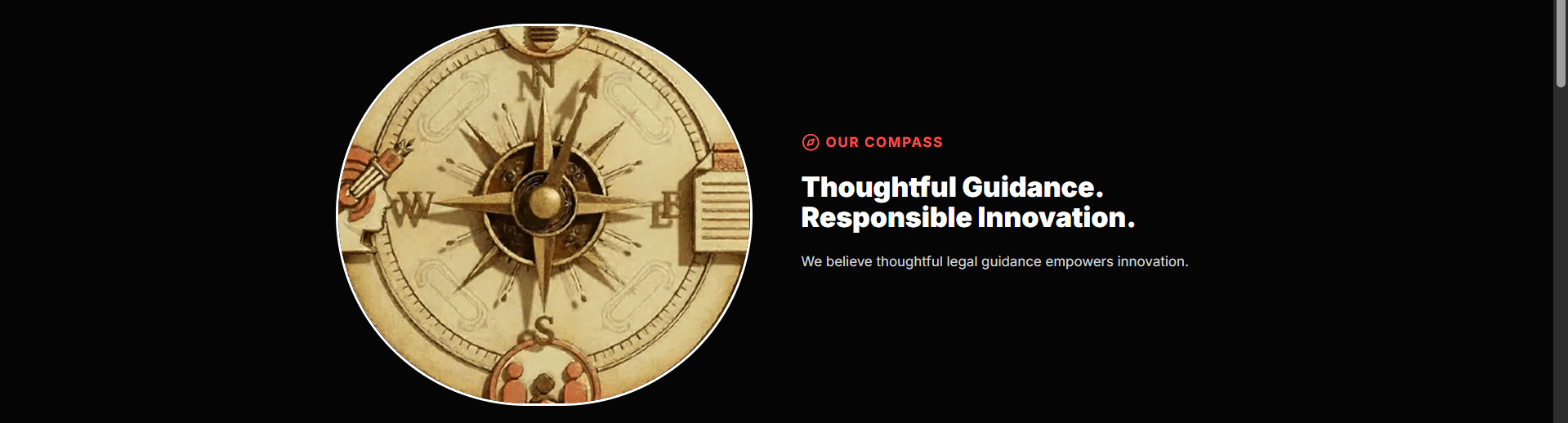
To bridge 'Ancient Law' and 'Future Tech', I combined classical layouts with neon accents.
Colors
Void Black
#000000
Alert Red
#F43D41
Ash Grey
#9CA3AF
Typography
Inter
Primary Sans-Serif
Bold Headlines
Regular Body
Secondary Info
Timeline
Week 1
UX Audit & Research
Week 2 & 3
Ideate & Design
Week 4 & 5
Development
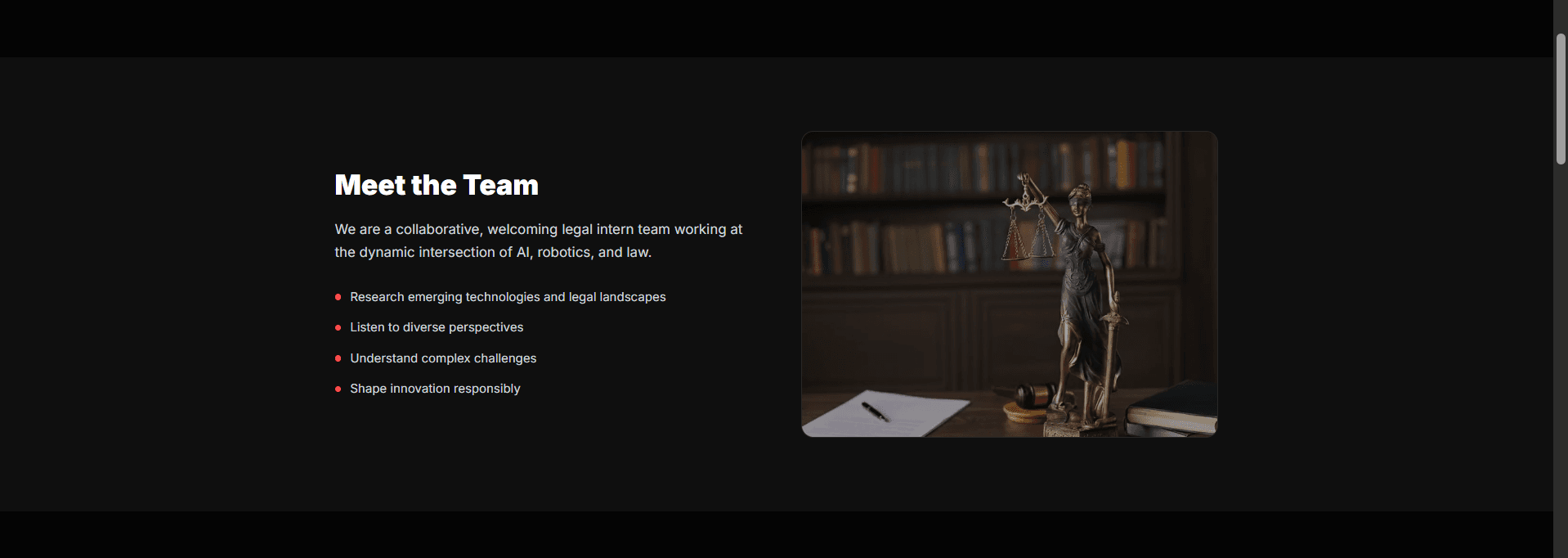
Final Product




Final Thoughts
The biggest takeaway from redesigning LEVI was unlearning the myth that 'accessible' means 'boring.' Designing for edge cases—like ensuring a high-energy brand palette works for low-vision users—didn't dilute the brand. Instead, it forced a cleaner, more deliberate visual hierarchy that improved the usability for every single user. Good accessibility is just good design.